Identity checks: What they are, how they work, and why they matter for modern businesses

Identity checks are the processes businesses use to confirm that a person is who they claim to be. They are a critical part of hiring, financial services, and everyday account access, helping reduce fraud and protect sensitive data. They range from requiring login information to the heavily regulated processes utilized by banks and governments.
As more work moves online, identity checks now extend beyond compliance into daily operations, shaping how teams grant access, share credentials, and maintain trust.
TeamPassword is the best password manager available for your business. Don’t believe us? Sign up for our free trial and try for yourself.
Table of Contents
What identity checks mean in different contexts
Identity checks take different forms depending on where and why they are used. While the goal is always to confirm a person’s identity, the methods, standards, and level of scrutiny vary across industries. Understanding these contexts helps clarify why identity checks can feel simple in one setting and highly complex in another.
Identity checks in hiring and human resources
In hiring, identity checks focus on confirming that a candidate is legally allowed to work and that their identity matches official records. Employers typically review government-issued identification and may cross-check personal details against background screening data.
These checks reduce the risk of hiring fraud and help organizations meet legal requirements. They also establish a baseline level of trust before granting access to internal systems and tools.
Identity checks in financial services
Financial institutions use identity checks as part of onboarding and ongoing customer monitoring. These checks are often tied to regulatory frameworks like Know Your Customer (KYC) and the Customer Identification Program (CIP), which require businesses to verify identities before providing services.
The process often includes document verification, database matching, and risk scoring. Because financial fraud carries high stakes, these checks tend to be more detailed and continuous.
Identity checks for online accounts and logins
For online platforms, identity checks help ensure that the person creating or accessing an account is authorized to do so. This can include email verification, multi-factor authentication, and device recognition.
These checks are designed to balance security with user experience. Too much friction can block legitimate users, while too little can expose accounts to unauthorized access.
Identity checks in government services
Government identity checks are designed to meet strict assurance standards. Agencies often require multiple forms of evidence, including documents and biometric data, to confirm identity before granting access to services.
These checks prioritize accuracy and long-term identity validation. They are often more rigorous than private sector processes due to the sensitivity of public data and services.
Types of identity checks used today
Identity checks are rarely a single step. Most systems combine several methods to build confidence that a person is legitimate. The mix depends on risk level, industry, and how sensitive the access or transaction is.
Here are some of the most common types of identity checks:
- Online identity checks require users to input their username and password.
- Document-based identity checks verify passports, driver’s licenses, or other official identification documents.
- Database identity checks compare personal information against credit bureaus, public records, or proprietary datasets.
- Biometric identity checks use physical traits such as facial recognition or fingerprints to confirm identity.
- Knowledge-based identity checks ask questions based on personal history that only the real person is expected to answer.
- Electronic identity checks validate identity using digital signals and aggregated data sources.
- In-person identity checks require physical presence and manual inspection of identification documents.
- Two-factor identity checks combine a password with a second verification method such as a code or device approval.
- Behavioral identity checks analyze patterns like typing speed or login habits to detect anomalies.
- Device-based identity checks evaluate whether a login attempt comes from a recognized or trusted device.
- Risk-based identity checks adjust verification requirements based on the context and perceived risk level.
- Continuous identity checks monitor user activity after login to ensure ongoing legitimacy.
- Federated identity checks rely on trusted third-party providers to authenticate users across platforms.
How identity checks work: The verification process
Identity checks follow a structured process rather than a single action. While the exact flow varies by industry, most systems use a layered approach that builds confidence step by step. Each stage adds another signal that helps determine whether an identity can be trusted.
Here is the complete step-by-step identity verification process:
- The process begins by collecting basic identity information such as a full name, date of birth, and address.
- The system gathers supporting evidence such as government-issued documents or account history.
- The information is validated against trusted data sources such as credit bureaus or official records.
- The system checks for inconsistencies, duplicate identities, or known fraud signals.
- Additional verification steps such as biometric matching or one-time passcodes may be required.
- A risk assessment evaluates the overall confidence level of the identity based on available data.
- Access is granted, limited, or denied depending on the outcome of the verification process.
Traditional vs digital identity checks
Identity checks have shifted from manual, in-person processes to fast, data-driven systems. Both approaches aim to confirm identity, but they differ in speed, scale, and user experience. Understanding these differences helps explain why many organizations are moving toward digital-first verification.
Traditional identity checks
Traditional identity checks rely on physical documents and human review. This often includes inspecting passports or driver’s licenses in person and comparing them to the individual presenting them.
These checks can be reliable but tend to be slower and harder to scale. They also depend heavily on staff training and consistency, which can introduce variability.
Digital identity checks
Digital identity checks use software to verify identity remotely. They combine document scanning, database validation, and biometric matching to confirm that a person is legitimate.
These systems are faster and easier to scale across large user bases. They also enable remote onboarding, which is now common in financial services and online platforms.
Key differences and tradeoffs
The main difference comes down to efficiency and coverage. Traditional methods offer direct human oversight, while digital systems provide speed and broader data analysis.
Most organizations now use a hybrid approach. They combine automated checks with targeted manual review to balance accuracy, cost, and user experience.
Why identity checks matter for modern businesses
Identity checks play a direct role in how businesses manage risk, protect data, and enable day-to-day operations. What once sat mainly in compliance workflows now affects everything from onboarding new users to controlling access across teams. As systems become more connected, weak identity checks create gaps that are easy to exploit.
At a basic level, identity checks help prevent fraud and unauthorized access. They ensure that only verified individuals can interact with systems, whether that means opening an account, joining a company, or logging into a shared tool.
They also support compliance in regulated industries. Requirements tied to frameworks like KYC and CIP make identity verification a legal necessity, not just a best practice.
Beyond risk and compliance, identity checks improve operational clarity. When businesses know exactly who is accessing systems and why, they can manage permissions more effectively and reduce confusion around shared access.
Identity checks and secure access management
Identity checks confirm a user’s identity, but they do not control access after verification. Teams still need a way to manage credentials, permissions, and shared accounts to prevent misuse.
Secure access management ensures that only the right people can use shared accounts and that access can be updated or removed as roles change. This reduces risk and gives teams better visibility over who can access sensitive tools and information.
Building stronger workflows with identity checks and password management
Identity checks establish trust, but teams need systems to maintain it through proper credential management. Password management lets teams store and share credentials securely, keeping access structured and intentional.
It also supports consistent workflows as teams grow, allowing new members to gain access quickly and former members to lose access without friction. Identity checks verify who someone is, and password management ensures that access aligns with that identity over time.
Turning identity checks into better team security with TeamPassword
Identity checks are essential for establishing trust, but maintaining that trust requires ongoing control over access and credentials. Teams need systems that make sharing accounts secure, track who has access, and allow permissions to change as roles evolve.
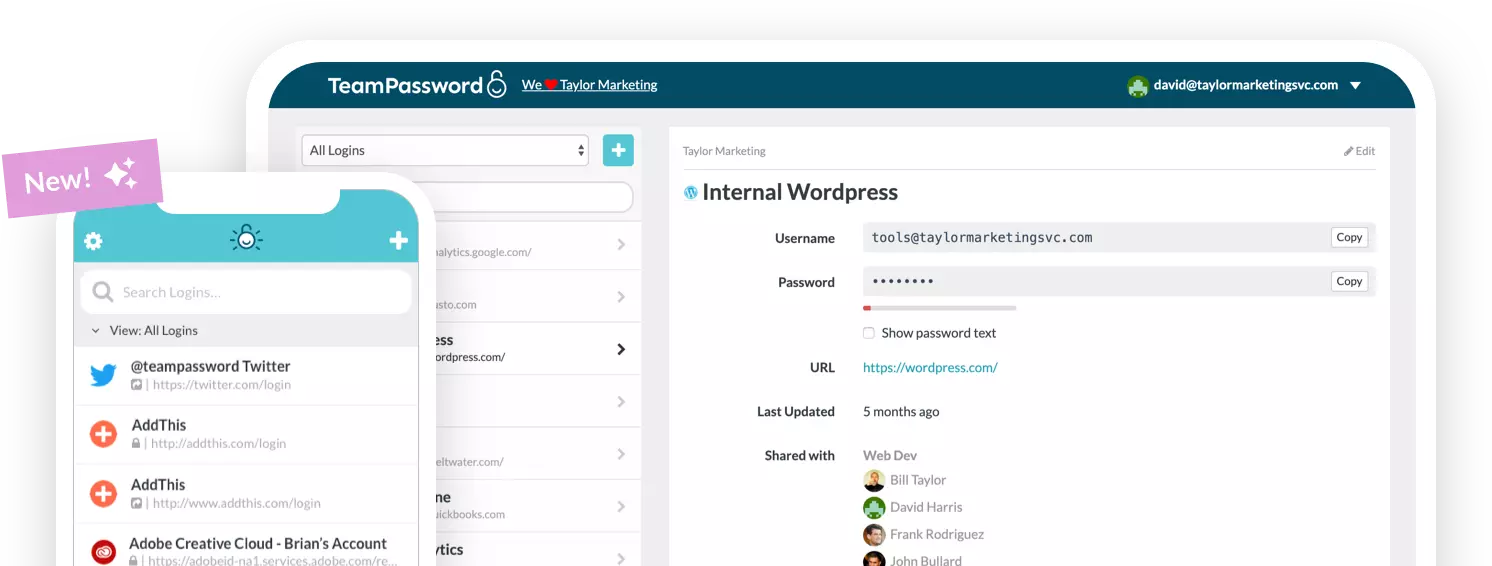
TeamPassword provides a simple, cost-effective way to extend identity verification into daily workflows. By combining secure password storage, team-based sharing, and permission management, it helps businesses protect sensitive information without adding unnecessary complexity.
When identity checks are paired with organized password management, teams gain both security and efficiency. This ensures that verified users can work collaboratively while reducing the risk of unauthorized access, making identity checks the foundation for smarter, safer business operations.
TeamPassword is the best password manager to secure your business. Don’t believe us? Sign up for a 14-day free trial today and try for yourself.
Posts Recomendados
The Database Behind Every Camera on Your Street
An explanation of the security implications of Flock Safety's interconnected database that's sweeping the nation.
Facebook Hacks: a History of Security Breaches at Facebook and Meta
Facebook has exposed millions of users' personal information over the years. Learn how to protect your company from ...
The Scariest Data Breaches of All Time
Learn what the scariest data breaches of all time are and how can you protect your data from ...
Top 10 cybersecurity threats for nonprofits (and how to prevent them)
Here’s what you need to know about cybersecurity threats for nonprofits, the top risks they face, and practical ...
Fortaleça a segurança das suas senhas
O melhor software para gerar e gerenciar suas senhas corretamente.